The same family, in the
same town, for
seven decades.
Gurnam Singh & Company has never operated at a distance from the place it came from. Three generations of the Saini family have lived and worked in Dera Bassi, and the commitments made there were made permanently — a hospital, a school, water for anyone who needed it, and a door that stays open.
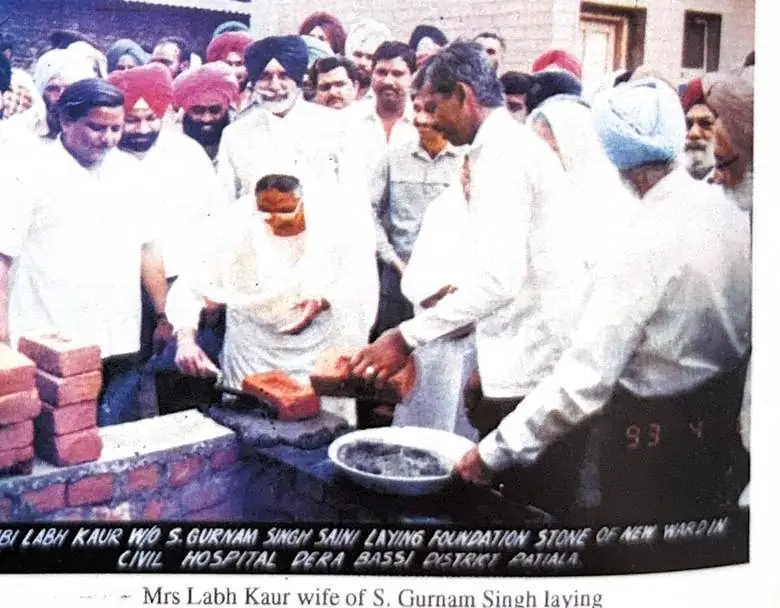
Bibi Labh Kaur, wife of the founder, laying the foundation stone of a new ward at the Civil Hospital, Dera Bassi
It began in the founder's own lifetime
The tradition of sewa in this family is as old as the company itself. Sardar Gurnam Singh Saini and Bibi Labh Kaur were both deeply respected in Dera Bassi long before the business grew — she laid the foundation stone of a new hospital ward herself.
Seven decades on, none of that has changed. The Chairman and his family still monitor water distribution and free water drives personally, in drought-prone and water-stressed areas, and remain reachable to anyone in the town who needs them.
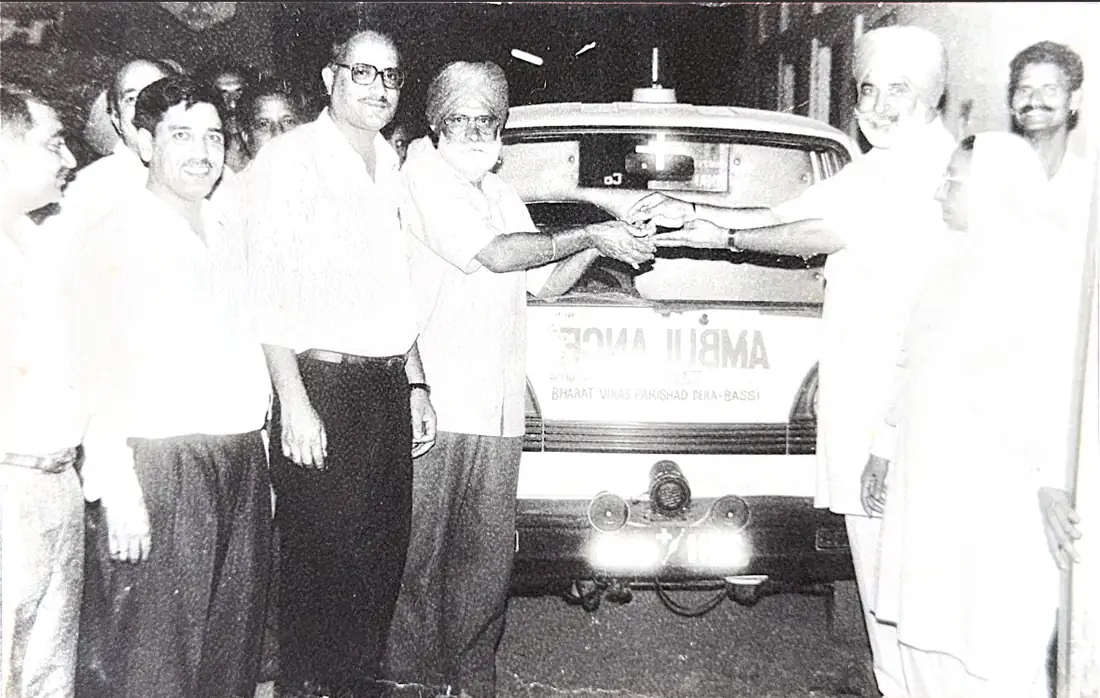
An ambulance handed over for the town · Bharat Vikas Parishad, Dera Bassi
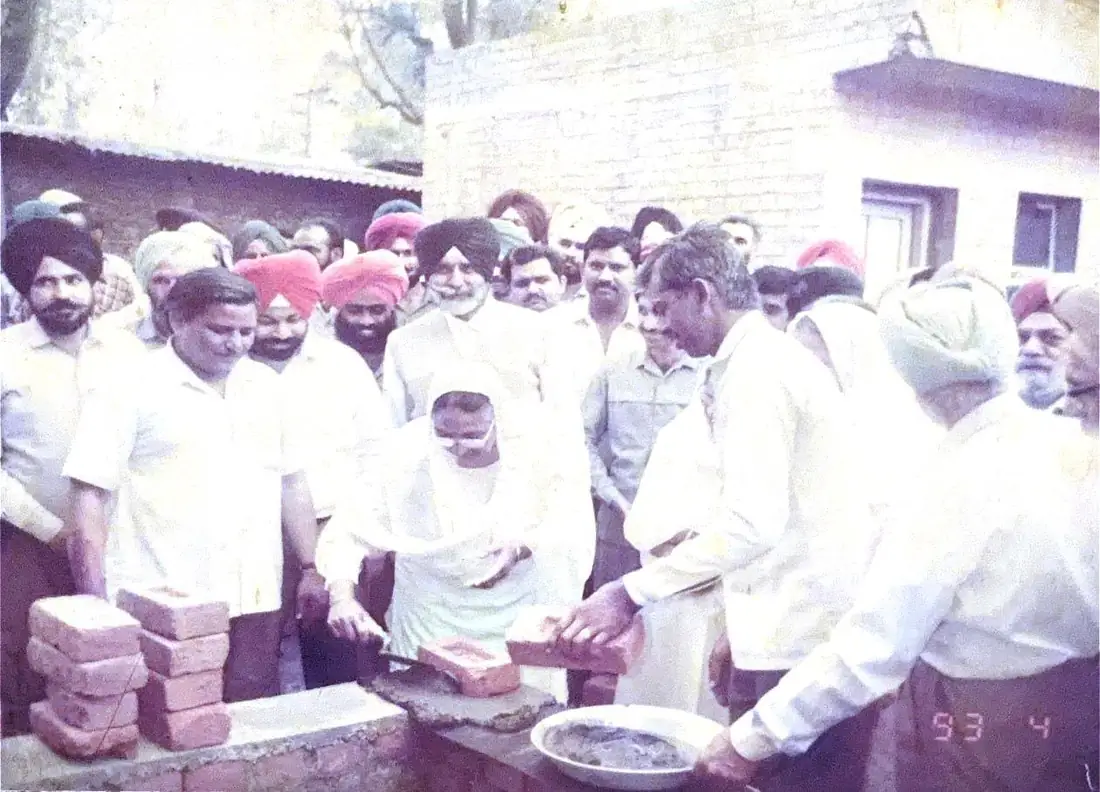
1993 · Laying the foundation stone, brick in hand, with half the town standing round — how things get built in Dera Bassi
Swargwasi Gurnam Singh
Saini School of Eminence,
Dera Bassi.
The Government of Punjab dedicated a government school in Dera Bassi to the name of the founder — a formal honour, granted in recognition of what three generations of this family have meant to the town. It is not a plaque on a wall. It is a working school, and hundreds of local children walk through that gate every morning.
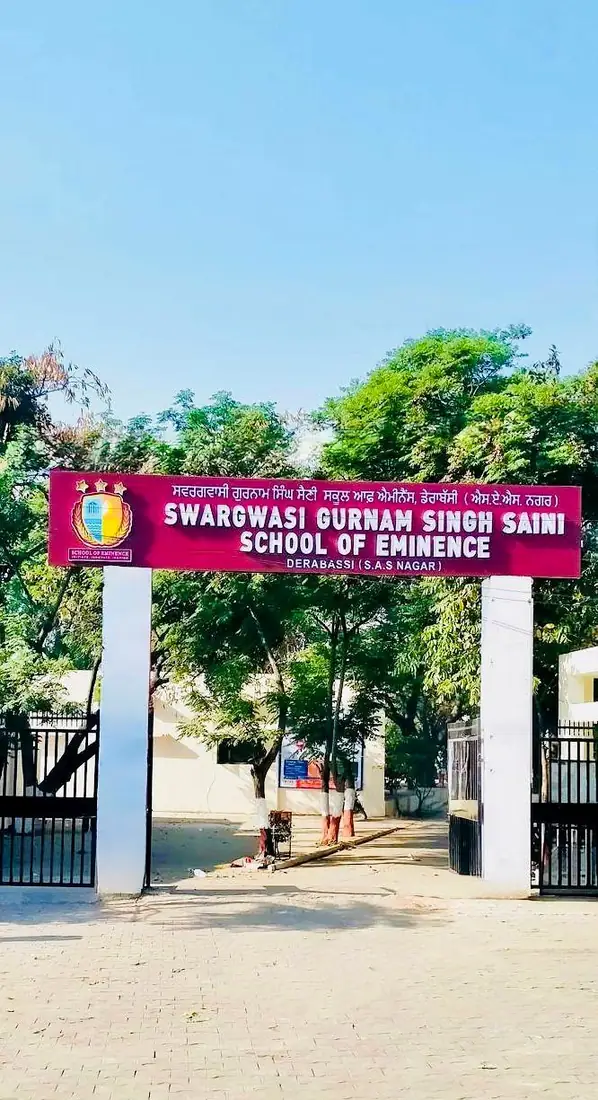
The name above the gate — Swargwasi Gurnam Singh Saini School of Eminence, Derabassi (S.A.S. Nagar)
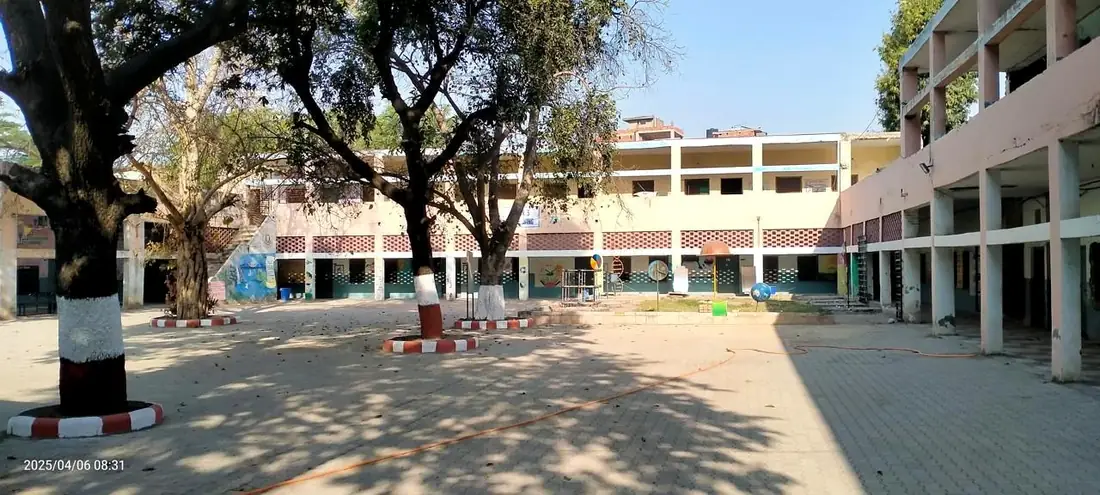
The courtyard between the blocks, shaded by trees older than the buildings
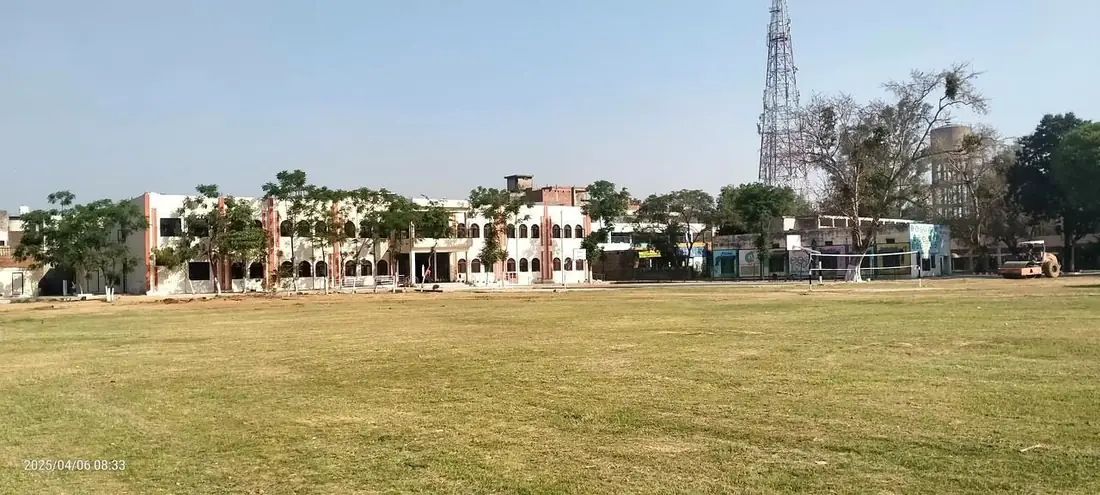
The main block across the playing field — a School of Eminence under the Punjab Government programme
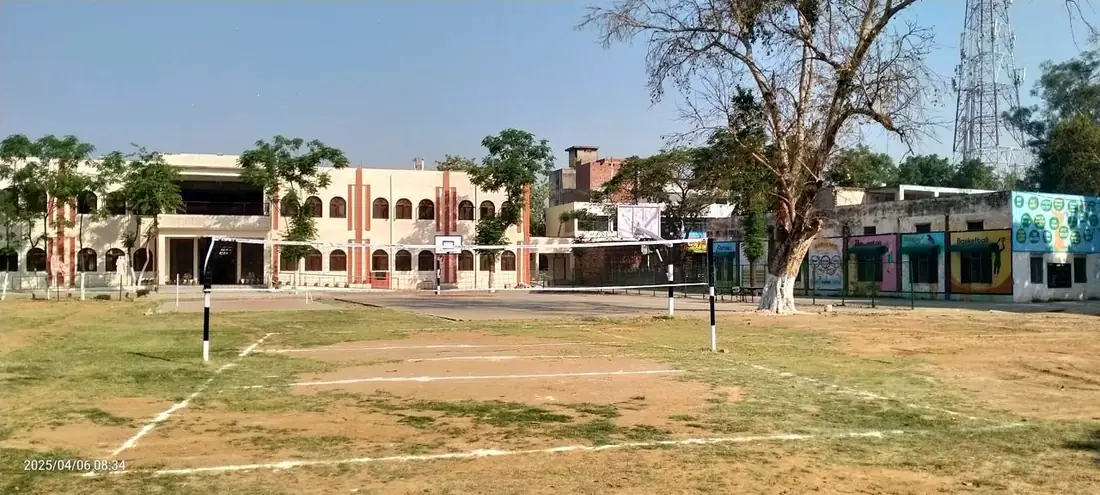
Volleyball and basketball courts marked out in front of the block
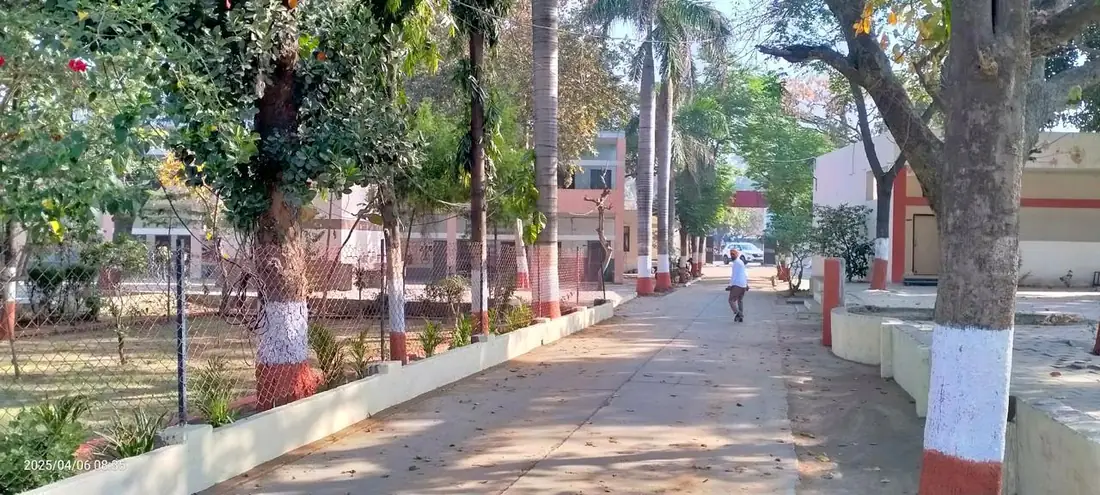
The walkway through the campus — planted, whitewashed and kept
Continuous investment follows the name: facilities and opportunities for local students, support to schools and colleges, and skill-development initiatives for the youth of the area — alongside Saini Bhawan, Chandigarh, built to give the community a lasting platform for unity, service and representation.
What this family built
for Dera Bassi.
Decades of grassroots sewa — standing with the people of Dera Bassi in their hardest moments, and in their everyday lives. Led personally, generation after generation: this is not a CSR budget. It is a family promise to a town.
A hospital built. Ambulances given.
Established and built a hospital in Dera Bassi for accessible, quality medical care — then handed it over to the Punjab Government, ensuring its continuity as a lasting public health institution, with further expansion of its services planned. Ambulances donated for the town through Bharat Vikas Parishad, and health camps organised for the elderly, rural families and the underprivileged.
A school named after Sardar Gurnam Singh Saini
The Government of Punjab dedicated a government school in Dera Bassi to the founder's name — a formal honour recognising the family's deep standing in the community. Continuous investment follows: better facilities for local students, support to schools, colleges and skill-development initiatives, and Saini Bhawan in Chandigarh — a lasting platform for unity, service and representation.
5,000+ families, free
A free water sewa programme so clean water is never a barrier — for households, healthcare institutions, religious establishments and community needs. One of the largest and most sustained free water access drives in the region, and the Chairman personally monitors distribution alongside his family in drought-prone and water-stressed areas.
Rooted in humility and faith
Long-standing support for Gurudwaras, temples and langars across the region, and consistent backing for religious, charitable and social initiatives in Dera Bassi — service to community institutions, done quietly and continuously.
Homes rebuilt after the floods
Houses were built for families who lost theirs in the devastating Punjab floods — a reflection of the belief that meaningful service is proven by standing with people in their hardest moments, not by words.
Reachable, always
A tradition of sewa since the time of Sardar Gurnam Singh Saini and Bibi Labh Kaur, both deeply respected across the region. The Chairman remains personally accessible to the people of Dera Bassi — responding to concerns, standing beside them in hardship and progress alike. Public service begins long before holding public office; sewa is a lifelong responsibility.
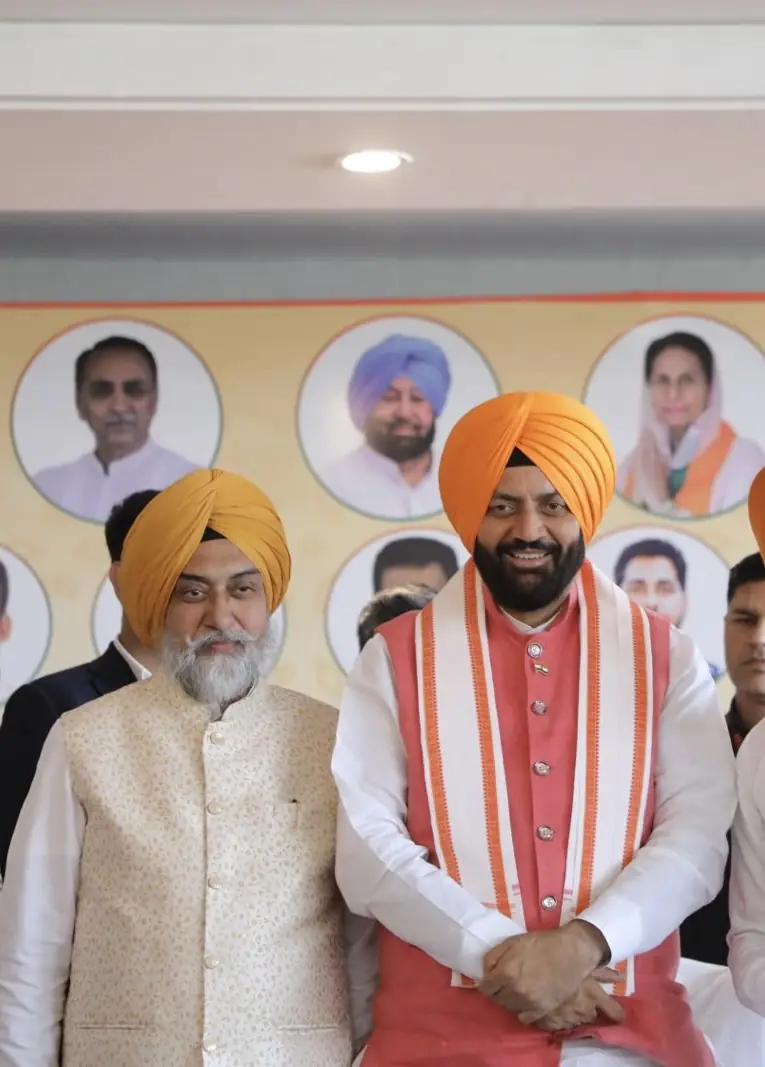
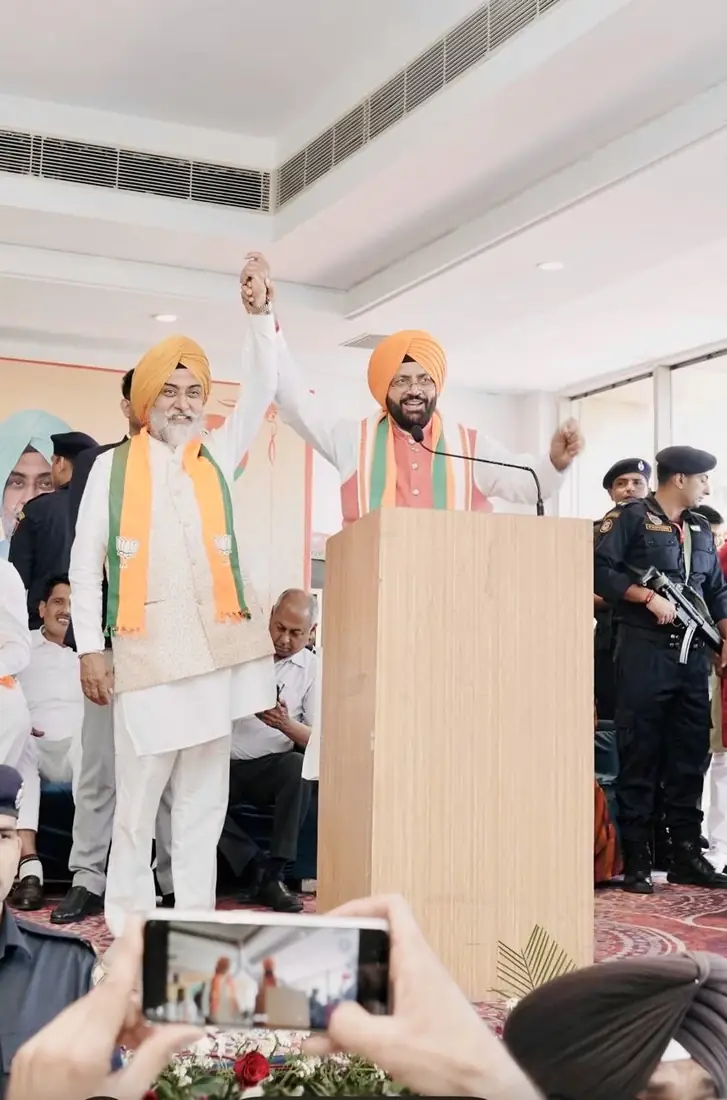
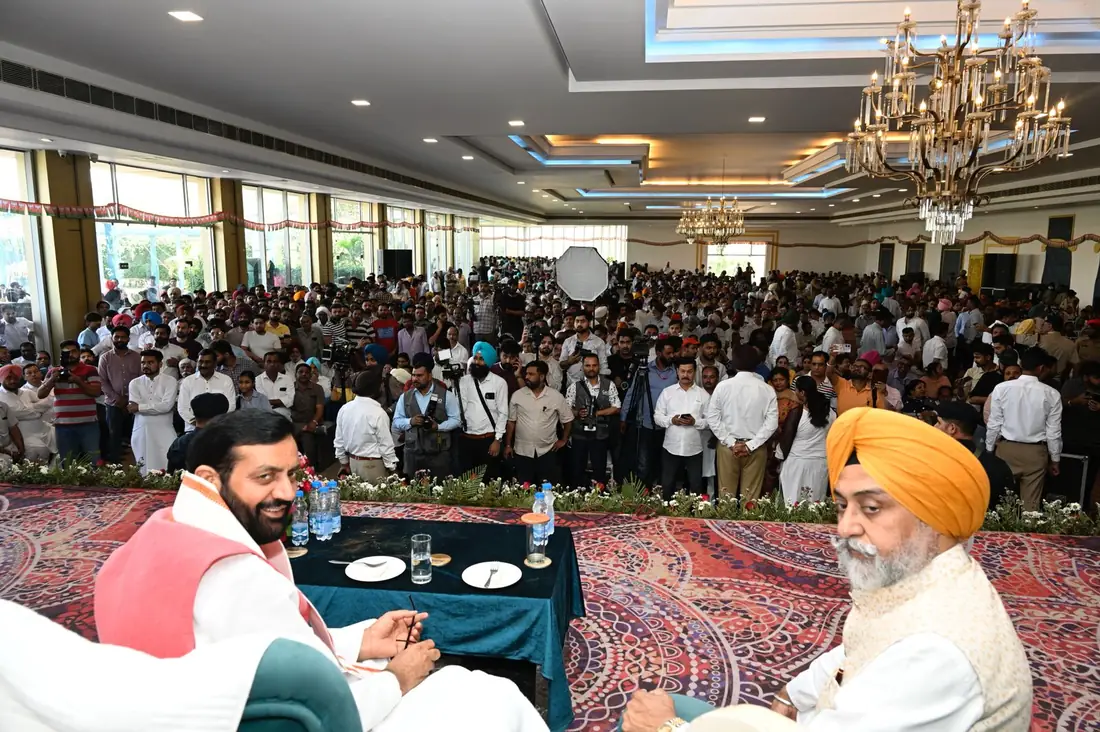
Sardar Gurdarshan Singh Saini joins the Bharatiya Janata Party, welcomed by Shri Nayab Singh Saini Ji, Chief Minister of Haryana.
Inducted personally by the Chief Minister, before nearly five thousand people who came of their own accord — a measure of grassroots strength, not of ceremony. Seventy years of sewa carried him to that stage; the work that follows is the point of it. Water security in every village. Healthcare within reach. Schools worth walking to. Infrastructure that arrives at the last house on the last street, not only the first — for the betterment of Dera Bassi, Punjab, together.
Rooted in service.
Built on trust.
Sardar Gurdarshan Singh Saini — Sewadar, Halka Dera Bassi, and Chairman & Managing Director of Gurnam Singh & Company. The sewa above is not separate from the public life below. It is the reason for it.
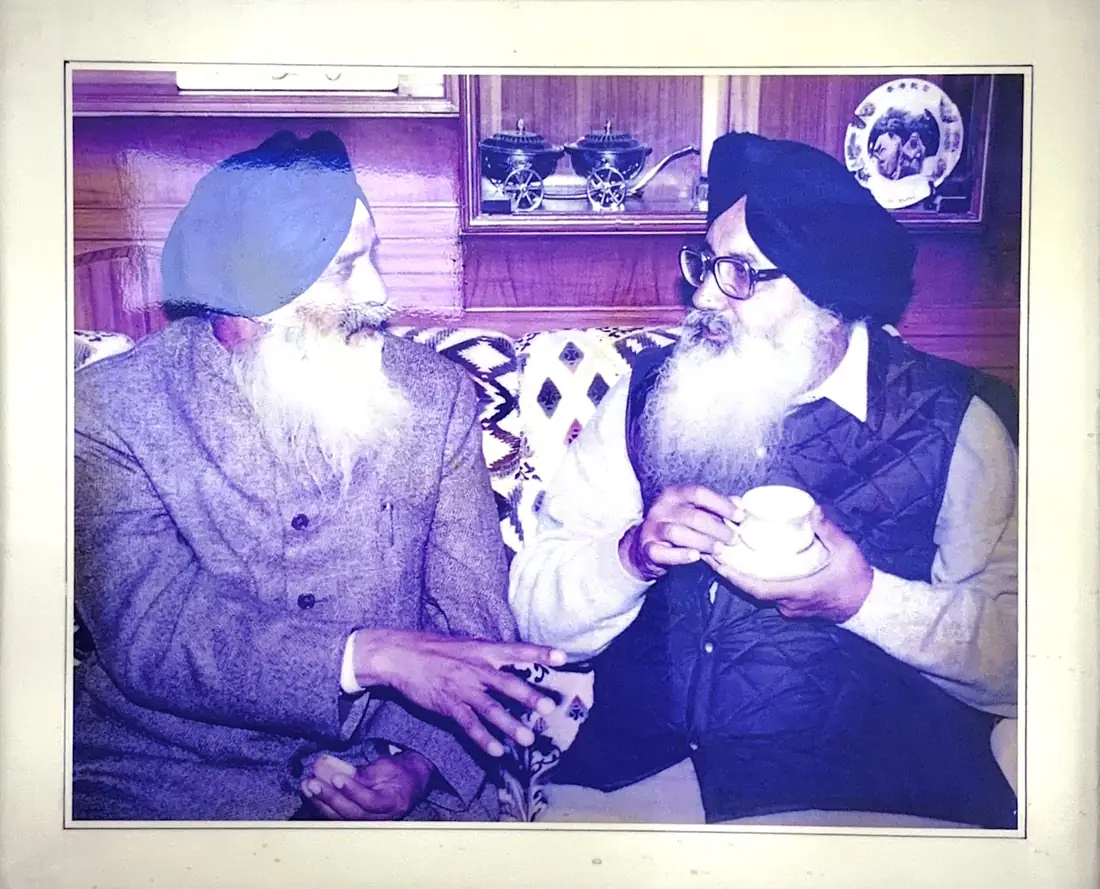
Sardar Gurnam Singh Saini with the late Sardar Parkash Singh Badal, Chief Minister of Punjab — an association of decades, carried on by the Chairman
A political life, five decades long
Sardar Gurdarshan Singh Saini has been a committed supporter of the Shiromani Akali Dal for over five decades — a long-standing personal commitment to Punjab's political and public life that began in his father's generation.
During the tenure of the late Sardar Parkash Singh Badal as Chief Minister of Punjab, he advised him on groundwater development, irrigation, water conservation, groundwater preservation, the water table, and the sustainable management of Punjab's water resources.
That association, and the work on Punjab's water that came out of it, is the ground the induction above stands on. Five decades of public life came first; the party card came later.
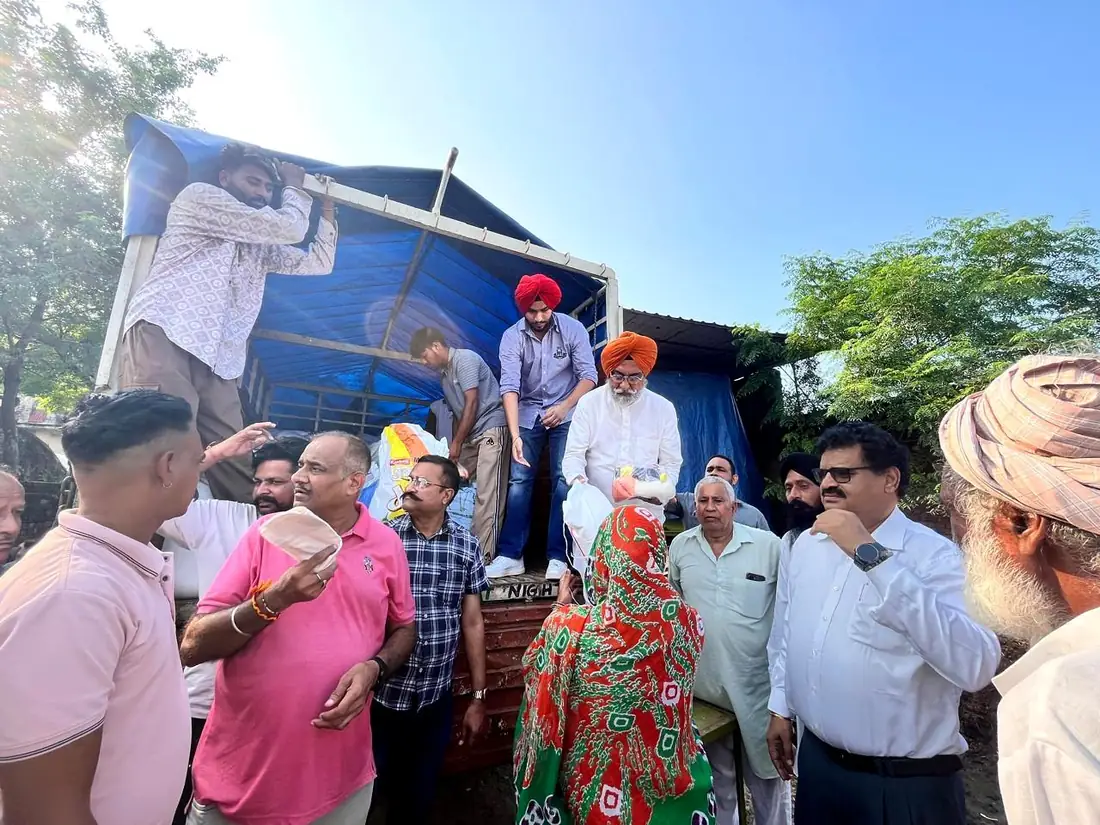
Relief handed down from the truck, one family at a time — after the Punjab floods. Homes were rebuilt for those who lost theirs.
A company that spends seventy years bringing water up knows exactly what it costs when it arrives uninvited.
The largest piece of
sewa is the day job.
Ten thousand tubewells across the country, serving governments, semi-government bodies, industries and farmers. Five hundred million gallons a day into supply. Projects delivered alongside PHE, Irrigation, Soil Conservation and the Military Engineering Services.
Every one of those wells reduced somebody's water scarcity. That is the part of the work that never appears in a CSR report, because it is simply what the company does.
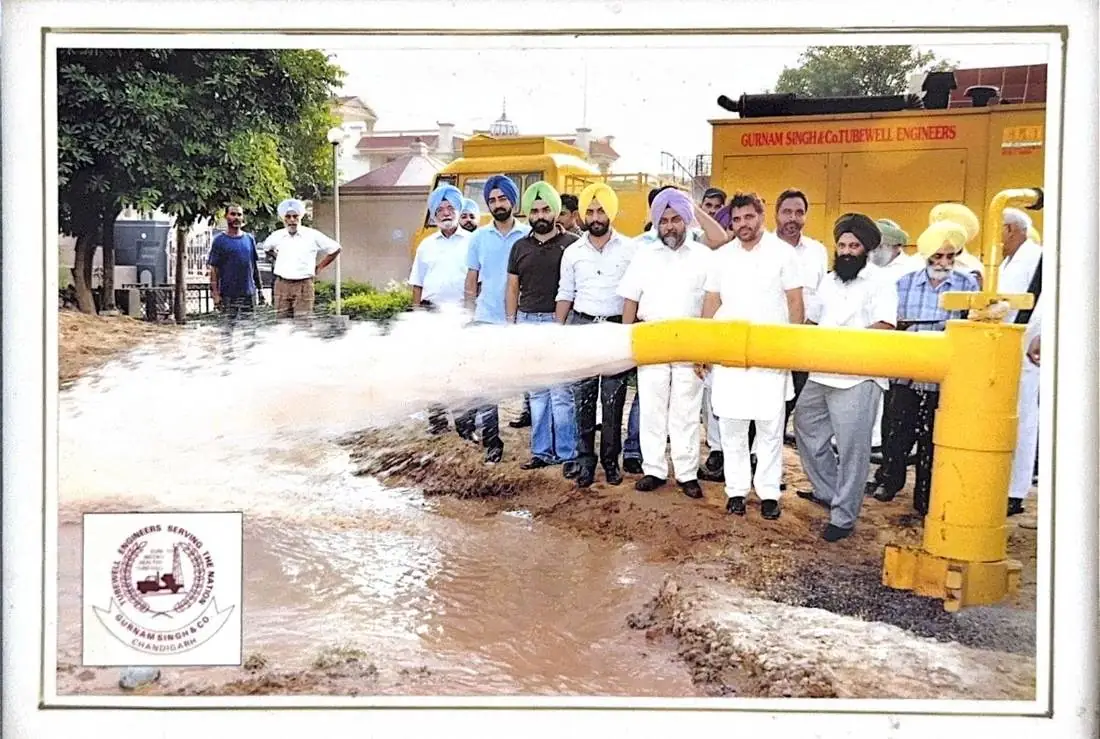
The moment a village's water arrives · a completed tubewell in full discharge
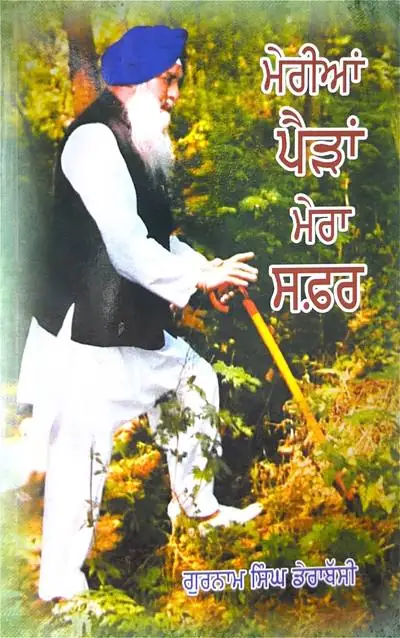
ਮੇਰੀਆਂ ਪੈੜਾਂ, ਮੇਰਾ ਸਫ਼ਰ — published under the name Gurnam Singh Dera Bassi
My Footprints,
My Journey.
Late in life, the founder did something rare for a man of his trade: he sat down and wrote it all out. ਮੇਰੀਆਂ ਪੈੜਾਂ, ਮੇਰਾ ਸਫ਼ਰ — My Footprints, My Journey — is his autobiography, published in Punjabi under the name he was known by across the region, Gurnam Singh Dera Bassi.
It is not a company history. It is the account of a boy who began as a drilling hand in 1951, who bought his own rig at twenty-three, and who spent the next six decades finding water for people who had none — told in his own voice, in his own language, with the villages named and the failures left in.
That is why the sewa on this page was never a department or a budget line. It was a temperament, written down and handed on: the conviction that a man is measured by what he leaves behind in the place that raised him. The school carries his name. The book carries his voice.
Advice grounded in
ten thousand wells.
Decades of practical groundwater engineering have made him a respected voice on Punjab's water infrastructure and long-term water security. When a block's yields fall or a district's water turns, this family holds the logs that show when it started and how deep it goes — the kind of evidence policy is rarely given.
Seal the upper formations — by law
He has argued before Punjab's water authorities and water boards that properly sealing the upper geological formations and well infrastructure should be mandatory during groundwater development — not left to contractor conscience.
Keeping the poison out
The practice prevents polluted surface water, chemicals and industrial contaminants from entering underground aquifers — protecting the purity of Punjab's groundwater and ensuring safer drinking water for the region's families.
Engineering plus sustainability
His environmental mission is to combine engineering excellence with sustainable practice — protecting the environment, strengthening groundwater security, and leaving a healthier Punjab for generations to come.
The engineering behind that argument is on the Environment page.
A record built in
the field, not on
a platform.
Chairman & Managing Director of Gurnam Singh & Company — carrying forward a legacy of water infrastructure that has shaped rural and industrial India for seven decades.
He carries forward the vision of his father, Sardar Gurnam Singh Saini, who founded the company in 1955 as India's first private well-drilling company — and grew it into one of Asia's largest names in well drilling and water infrastructure, contributing nearly 500 million gallons of water per day to cities, states, farmers, villages, municipal bodies, defence establishments and government projects nationwide.
A pioneer of the deep drilling industry, he brought advanced deep borewell machinery from Canada, capable of boring to a full kilometre — and the company remains the only one in India equipped with this specific deep-drilling technology, a distinction unmatched anywhere else in the country.
He played a defining role in Punjab's Green Revolution, boring the wells that carried irrigation across the state. He kept operations running in Jammu & Kashmir through the militancy years — even when gunfire reached the work sites and machinery was damaged. He has delivered deep borewell success in geologically difficult terrain, including Uttarakhand's hill regions where groundwater is notoriously hard to locate.
Projects have been executed under Jal Jeevan Mission (Har Ghar Jal), AMRUT, the Smart City Mission and World Bank-supported rural water schemes, with an active footprint across Jammu & Kashmir, Uttarakhand, Himachal Pradesh, West Bengal, Punjab, Haryana and Panchkula.
Both he and the company hold Senior Membership of the Australian Drilling Industry Association, alongside recognition from the National Ground Water Association (USA) — international standing among global drilling and groundwater professionals.
A leadership model built
over generations, not
created overnight.
The Saini family's standing in Dera Bassi has been earned across three generations — through decades of grassroots service, public welfare, business leadership, and direct, personal connection with the people.
The combination is a rare one in Punjab politics: industrial credibility, rural and farmer connect, and community representation in a single figure. A proven presence during crisis — continued operations through the militancy years in Jammu & Kashmir, and flood relief efforts led in Punjab. A deep grassroots hold across Dera Bassi, built over decades through sewa and personal accessibility, with a following that runs through farmers, youth, business families, workers, religious institutions and ordinary citizens alike.
Within Dera Bassi, the Saini community's presence exceeds 50,000 people, and across Punjab it represents an estimated ten per cent of the population — one of the state's significant and influential social groups, with real weight in local politics, public life and electoral outcomes. He commands one of the strongest and most consolidated holds within that community — earned, not assumed, and rooted in seven decades of family sewa, industrial credibility, and being personally present in people's hardest moments.
He understands the pride, aspirations, challenges and concerns of the community from within — and channels that understanding into a broader, inclusive vision for the development, welfare and progress of every community in Dera Bassi and Punjab. A political journey built on credibility rather than slogans: grounded in water projects, welfare work, educatUttarakhand · Himachal Pradeshion, healthcare and religious service.
Recognised at home
and abroad.
Earned under his leadership — reflecting both technical excellence and national and international credibility.
Punjab State Award · 1991 & 2008
The state's highest civilian honour for excellence in tubewell engineering — conferred on the founder in 1991 and on him in 2008.
Recognised by the Indian Air Force
Formally recognised for water infrastructure support to defence establishments, and honoured by senior defence authorities including G.O.C. II Corps, Ambala, for critical infrastructure work.
NGWA · ADIA · Asian Development Bank
Senior Member of the National Ground Water Association (USA) and the Australian Drilling Industry Association, and appreciated by the Asian Development Bank for contribution to water development projects.
The full archive of awards and certificates is on the Honours page.
Sewa, turned into
something that lasts.
To transform seven decades of grassroots sewa into lasting institutional change for Dera Bassi and Punjab — building water security, quality healthcare, strong education, and modern infrastructure that reach every home and every family.
Guided by a legacy of three generations of service, the mission is clear: development that is felt on the ground, progress that includes every community, and leadership that is earned every single day — not once at the ballot box, but continuously, through presence, action, and accountability to the people of Dera Bassi.